
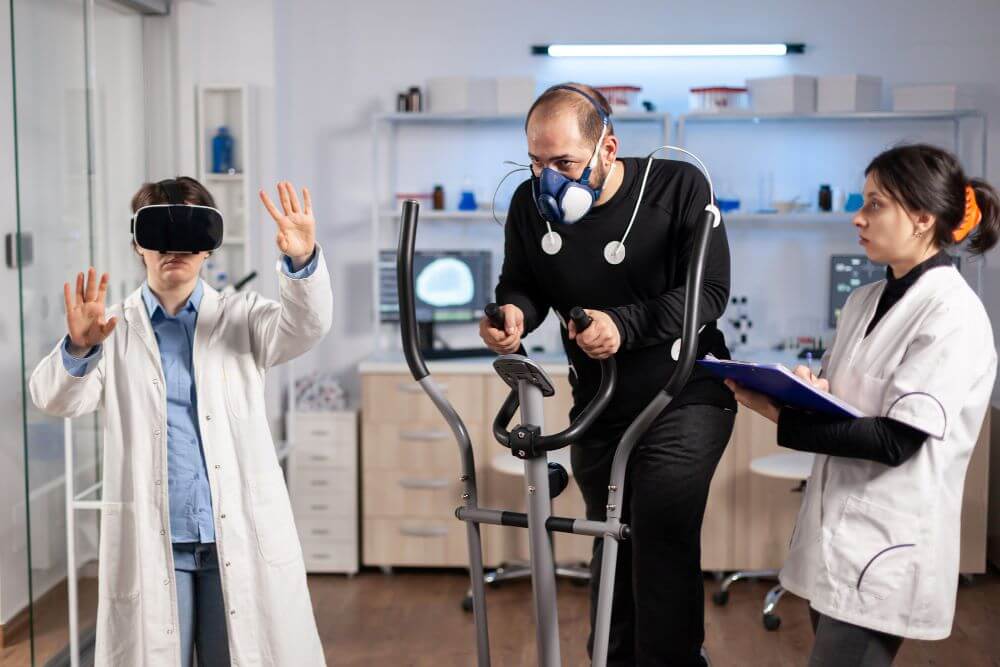
Healthcare is a matter of how you interact with patients and colleagues, and the quality of care you provide depends on that. Although technical skills are vital for your treatment, the ability to show clarity in conversation will instil trust in a medical setting. In this blog, you will learn how simulations are changing the way medical staff develop interpersonal and emotional intelligence skills.
1. Enhancing Patient Safety Through Clearer Communication
Good communication allows important information to be passed from the staff to those receiving care, so everyone is aware. When training in-depth, you are learning to disseminate hard information in a way to prevent misinformation from occurring during stress and chaos on long shifts. These simulators help you fine-tune your verbal and non-verbal instructions so you’re able to repeat them clearly.
2. Building Genuine Empathy in Clinical Environments
Developing a deep sense of empathy allows you to see the world through the eyes of a person who might be feeling vulnerable or afraid. Immersive training tools allow you to experience a consultation from the patient’s point of view, which shows how your tone and body language affect their comfort. Furthermore, this teaches you how to offer support that feels both authentic and comforting.
3. Managing High-Pressure Conversations with Confidence
Dealing with difficult news or navigating tense family dynamics requires a high level of composure. Through realistic roleplay scenarios, you can confront these challenging moments in a controlled setting where you are free to trial different approaches. As a result, you will find yourself approaching real-life difficult conversations with a calm and professional demeanour that de-escalates tension effectively.
4. Promoting Seamless Collaboration within Medical Teams
Success in a healthcare setting depends on how well you can coordinate and collaborate with a diverse group of specialists and support staff. Immersive soft skill training for healthcare modules focuses heavily on teamwork by simulating collaborative environments. These exercises help you recognise the value of every team member’s contribution while teaching you how to give and receive constructive feedback.
5. Improving Conflict Resolution and Problem Solving
In a fast-paced medical facility, disagreements are almost inevitable, and your ability to handle these hitches smoothly is a key indicator of leadership. Immersive training presents you with realistic workplace conflicts, such as navigating a disagreement over a care plan or managing a frustrated coworker. You learn to identify the root cause of a problem while maintaining a respectful tone.
6. Standardising the Quality of Staff Interactions
One of the challenges in large medical organisations is ensuring that every patient receives the same high standard of interpersonal care. Digital soft skill platforms offer a consistent curriculum that provides every learner with the same scenarios and feedback loops. When every staff member is trained to the same high level, the overall reputation of the facility grows as patients experience a reliable service.
7. Accelerating Professional Growth Through Instant Feedback
The traditional way of learning soft skills often lacks immediate guidance, leaving you to wonder if your approach was truly effective. Immersive platforms change this by providing instant data and analysis on your performance. This rapid feedback loop allows you to make adjustments in real-time, which significantly speeds up the learning process compared to waiting for a yearly performance review.
Advancing the Future of Medical Interaction
Reflecting on these points shows that the integration of technology into education is a step towards modernising care. As you continue to use these tools to sharpen your communication and leadership, you contribute to a culture of excellence that benefits the entire community. Staying committed ensures that your career remains vibrant and that your impact on others is always positive and profound.